Why toys matter: how play shapes early childhood development
How play shapes early childhood development, age by age.
Playloop team
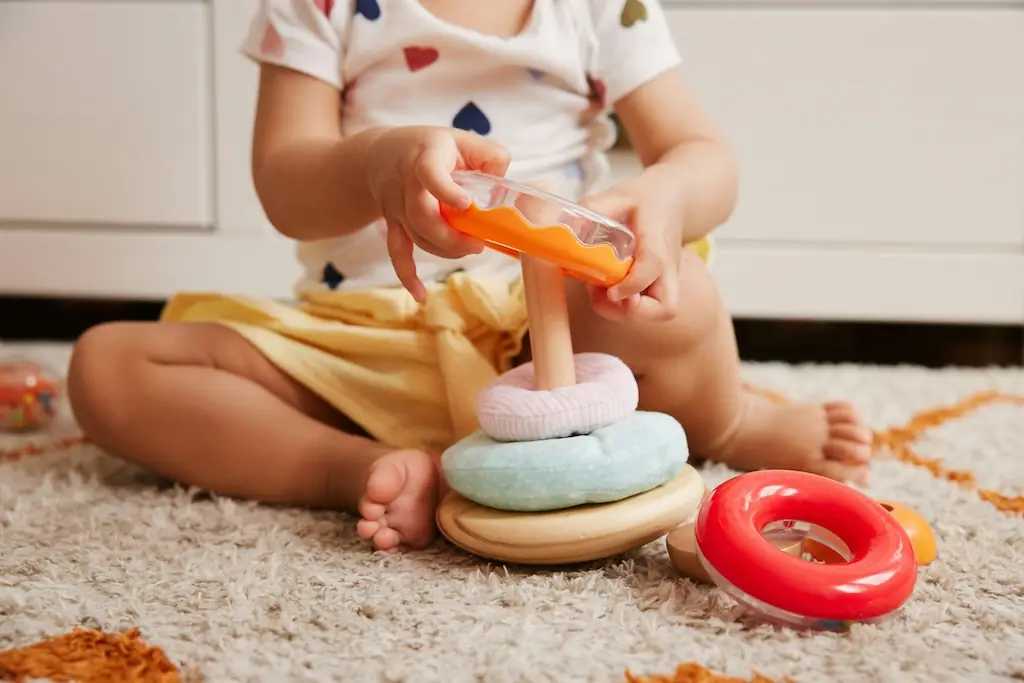
It's easy to think of toys as, well, just toys — plastic and wood and fabric that either keeps a toddler busy for ten minutes or doesn't. But from birth to about age six, toys are doing some of the most important developmental work of your child's life, and it's worth understanding why, especially if you're trying to figure out what's actually worth keeping in the toy box.
Toys are how young children learn, before they can be taught
A baby stacking rings isn't just playing — they're learning cause and effect, hand-eye coordination, and the early physics of balance. A toddler pretending a wooden spoon is a phone is building the exact same imaginative muscle they'll later use for storytelling, empathy, and problem-solving. Play is, quite literally, how a young brain explores the world before language and formal learning take over.
Different ages, different jobs
- 0–12 months: Toys are mostly about the senses — texture, sound, contrast, and simple cause-and-effect (press this, that happens). Rattles, soft blocks, and simple stacking toys do a lot of heavy lifting here.
- 1–2 years: This is when toys start supporting gross motor skills (push toys, ride-ons) and early sorting and matching (shape sorters, simple puzzles).
- 2–4 years: Pretend play explodes. Kitchens, dolls, figures, dress-up — anything open-ended that lets a child assign their own story to an object.
- 4–6 years: Kids start wanting rules, structure, and mastery — board games, building sets with instructions, early art and craft kits.
The toy matters less than the kind of play it invites
One of the more useful things we've learned building Playloop is that the "best" toy for a given age isn't usually the flashiest one — it's the one that invites open-ended play instead of doing all the thinking for the child. A single wooden block set often outlasts three battery-powered toys in terms of how long a kid actually stays engaged with it, precisely because it can become a hundred different things.
Why this matters for swapping
Once you see toys through this lens, toy rotation and swapping stop feeling like "getting rid of stuff" and start feeling like what they actually are: matching your child with the right kind of play for their current stage, instead of holding onto things that already did their job. A toy your toddler has mastered isn't wasted — it's ready for someone else's toddler to fall in love with.
We'll be writing more on age-by-age toy guides soon. For now: if you're staring at a toy box wondering what's worth keeping, ask what kind of play it invites, not how new it looks.
Keep reading
More like this.
Nearby
Swapping in Barcelona.
Playloop is live across Barcelona. Find the families closest to you:
New stories, straight to your inbox.
A short email whenever we publish something new — swap stories, toy guides, and what's on in your neighborhood.
Want to be featured?
We're always looking for family stories — the swap that saved your week, the toy that came back to life, the playgroup that turned into friends. Tell us yours and we'll help you write it.